




Ask most people how to fly into Seattle and you’ll get one answer: SeaTac. It’s the right answer most of the time. But it’s not the only airport serving the region, and for a specific slice of trips, it’s not even the best one. Here’s how to actually decide.
Start With Your Destination, Not Your Preference
The fastest way to figure out which airport makes sense is to check whether your destination is on Paine Field’s route list before you assume SeaTac is your only option. Paine Field, up in Everett, is a small commercial airport that opened for passenger service in 2019, served primarily by Alaska Airlines flying nonstop to a short list of West Coast and warm-weather cities, places like Los Angeles, San Francisco, San Diego, Las Vegas, Phoenix, Portland, and seasonally Honolulu and Palm Springs.
If where you’re going isn’t on that list, this isn’t really a decision, SeaTac is your airport. It’s the major hub for the region, with dozens of airlines and connections to essentially anywhere else in the world. Paine Field was never designed to compete with that, it was built as a smaller, deliberately limited alternative for a specific set of routes.
Then Check Where You’re Actually Going Once You Land
This is the part travelers skip, and it’s often the more important factor. SeaTac sits south of downtown Seattle. Paine Field sits north, in Everett. If your final destination is Everett, Mukilteo, Bothell, or the north Eastside, flying into Paine Field on a route it serves can save you a real chunk of driving, sometimes close to an hour round trip compared to landing at SeaTac and driving back north. If you’re headed into downtown Seattle or south King County, that math flips, and SeaTac’s the shorter drive.
What You’re Actually Trading Off
The practical difference between the two airports isn’t really about the flight, it’s about everything around it. SeaTac is a large, busy, international-scale airport: more security lines, longer walks between gates, but also more flight options if your plans change. Paine Field is small enough that security waits are commonly just a few minutes and parking-to-gate can take well under half an hour, but the tradeoff is a genuinely short list of destinations and, for most routes, a single carrier.
Neither is objectively better. A traveler connecting internationally through Seattle has no real reason to consider Paine Field. A Los Angeles-based traveler flying up for a weekend in Everett has very little reason to fight SeaTac’s crowds instead.
The One-Question Test
If you want the short version: does Paine Field fly where you’re going, and does that save you a meaningful drive on the other end? If yes to both, it’s worth booking over SeaTac. If either answer is no, SeaTac remains the more practical choice, and it’s not close.
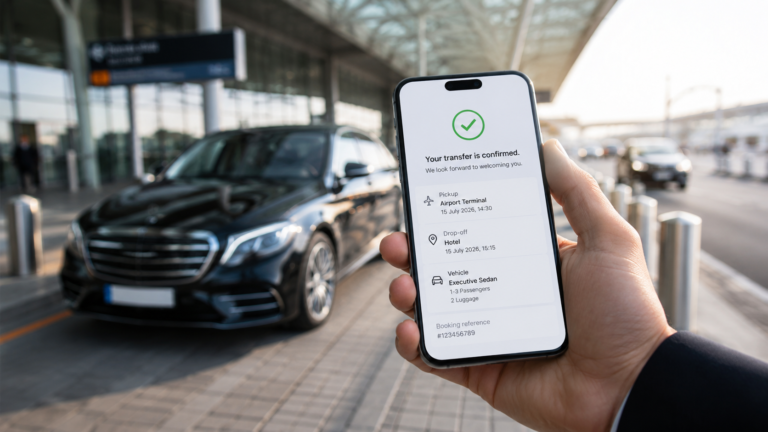
Whichever airport you land at, the same rule applies for getting into the city: plan around Seattle traffic patterns rather than the flight time alone, and consider a car service that tracks your actual flight rather than a fixed pickup window if your schedule has any real stakes attached to it. Operators like H Black Service Seattle run flight-tracked transfers to both airports specifically because “the flight landed on time” and “the car is actually there” are two different problems.