

“Compete on service, not price” is easy advice to give and hard advice to operationalize. Most operators agree with it in principle and still end up in the same rate war a year later, because nobody ever tells them what “service” is supposed to look like on a Tuesday afternoon, with three cars running fifteen minutes behind and a client who’s already had a long day.
I built Vimzi Limo, a chauffeured transportation company based in Miami, around one specific answer to that question. Not a slogan. A checklist.
Flight tracking. The chauffeur arriving early. Meet and greet. Luggage assistance. Direct communication with the client. A clean, premium vehicle. Attention to every detail. That’s not marketing copy sitting on a website — that’s the operational standard for every reservation, every time, whether the client is a first-time booking or someone we’ve driven a hundred times.
Here’s the part that took me longer to learn than I’d like to admit: none of that is difficult individually. What’s difficult is making it non-negotiable.
Why “Service Quality” Fails as an Abstraction
Every operator I’ve talked to at industry events says some version of the same thing: we provide excellent service. Almost nobody can tell you exactly what that means in operational terms, on a bad day, with a chauffeur who’s tired and a client who’s running late.
That’s the gap. “Excellent service” is a feeling a client has after the ride. It’s not something a chauffeur can execute directly, because it’s not a task — it’s an outcome. The moment you break it down into the specific, repeatable actions that actually produce that feeling, it stops being a philosophy and starts being a standard you can train, check, and enforce.
That’s the entire idea behind the checklist. Each item on it is something a chauffeur can actually do, not just embody.
The Checklist, Broken Down
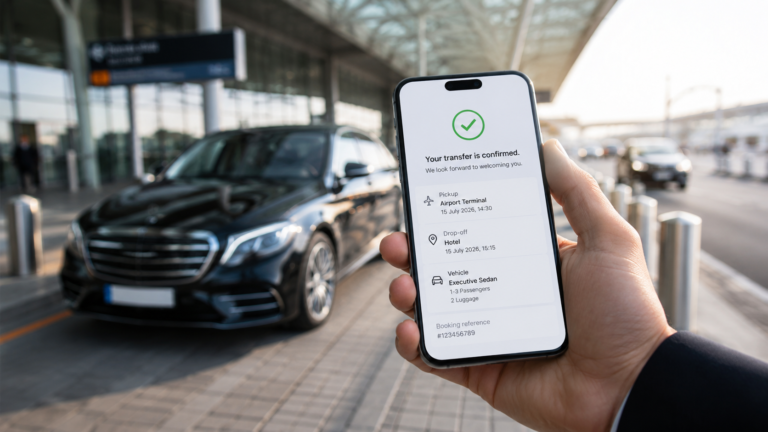
Flight tracking. This one seems obvious, and most operators say they do it. Fewer actually build their dispatch process around it as a default rather than a courtesy. If a flight lands 40 minutes early and your chauffeur is still following the original scheduled pickup time, you haven’t tracked the flight — you’ve just looked at it once. The standard has to be: the pickup time adjusts automatically, every time, without the client having to call and ask.
The chauffeur arriving early. Not on time. Early. On-time arrival is the minimum a client expects; it doesn’t register as service, it just avoids being a complaint. A chauffeur who’s already in position before the client is ready sends a completely different signal — that this reservation was treated as a priority, not a slot on a schedule.
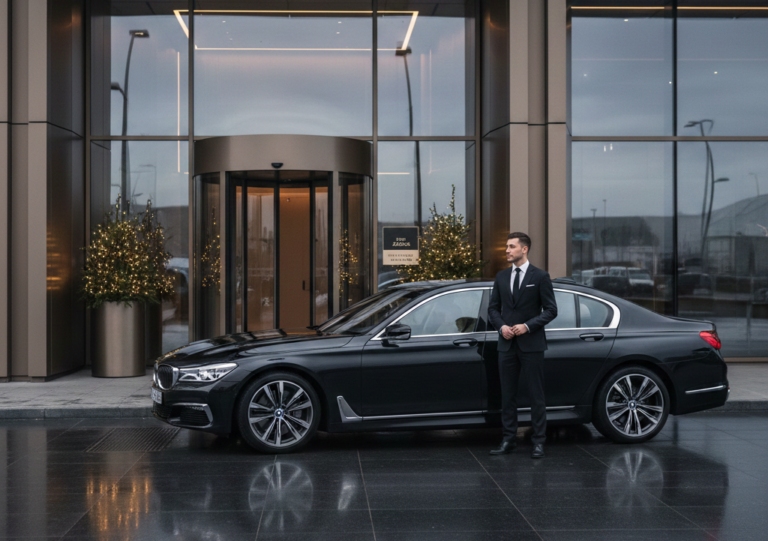
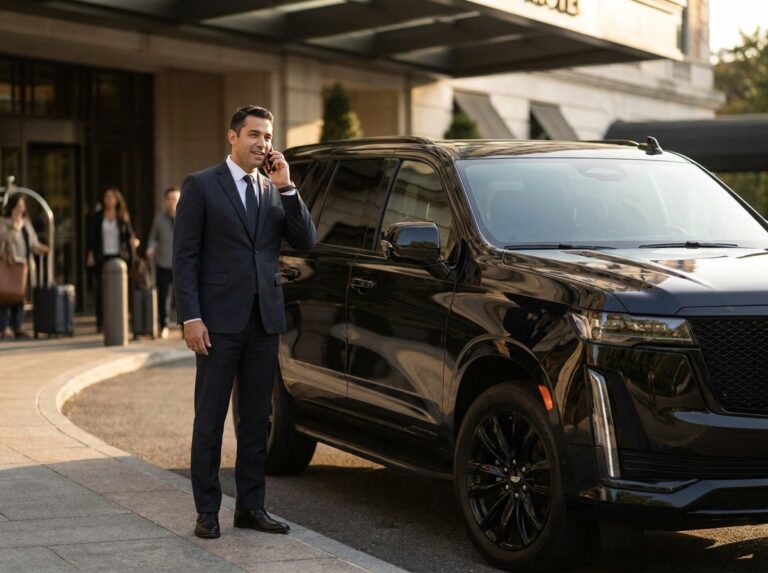
Meet and greet, as a default, not an upsell. I’ve seen operators treat this as a premium add-on. In my view, that’s backwards. The five minutes it takes for a chauffeur to be visibly present, holding a sign, ready to take a bag, is one of the cheapest ways to make a client feel taken care of the moment they land — and it should be built into the base service, not priced separately.
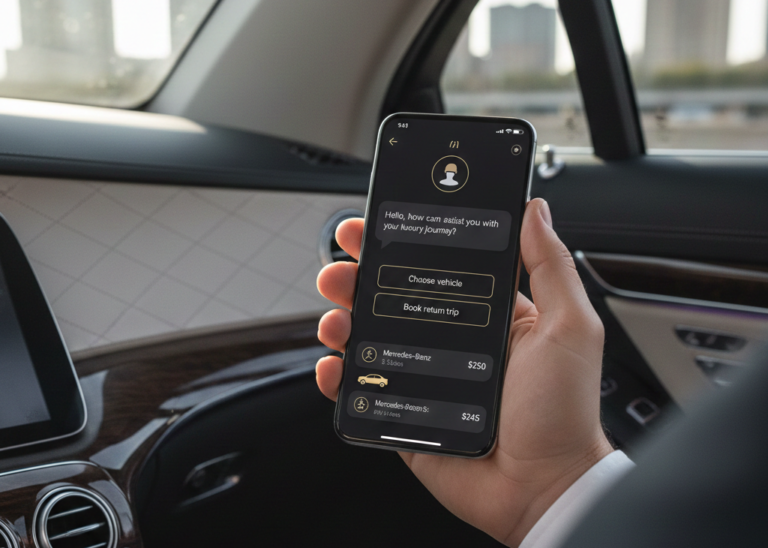
Direct communication. A client should be able to reach the person actually driving them, not a dispatch queue. This is a genuine operational tradeoff — it requires trusting your chauffeurs with more direct client contact than some companies are comfortable with — but it’s also exactly the thing a rideshare platform structurally cannot offer. That gap is worth protecting.
A clean, premium vehicle, and real attention to detail. These are the two items that get treated as given and are actually the easiest to let slip. A vehicle that was clean on Monday and hasn’t been checked since Thursday is not a clean vehicle by Friday afternoon. This has to be a standing inspection habit, not a one-time setup.
A Structural Choice Worth Mentioning: Operating Without a Storefront
Vimzi is structured as a service-area business — we serve clients throughout Miami-Dade and Broward, including MIA, FLL, PortMiami, Port Everglades, private aviation, hotels, and residences, without a public office clients visit. I bring this up because it’s a real operational decision with real tradeoffs, not just a cost-saving footnote. It means every single point of contact a client has with the company happens through direct communication and the ride itself — there’s no storefront experience to lean on or hide behind. If the service checklist above isn’t executed consistently, there’s nothing else propping up the client’s impression of the company. That’s exactly why it has to be enforced, not aspired to.
A Short Conversation on Making It Real
LIMOmag: A lot of operators would say they already do all of this. What’s different about how Vimzi actually executes it?
Hamid: Saying you do it, and a chauffeur actually doing it on every single ride — including the ones I never personally see — are two different things. That’s chauffeur standards, not marketing. It has to be trained and checked, not assumed.
LIMOmag: How do you actually check it, day to day, once the company grows past a size where you’re personally on every ride?
Hamid: Direct client communication is part of the answer — if something was missed, I hear about it quickly, because clients can reach someone who cares, not a general inbox. But I’m also still directly involved in chauffeur standards myself. The moment I stop being involved in that, the standard starts to drift, even with good intentions.
LIMOmag: You’ve spent years attending industry events — Chauffeur Driven, NLA, others. What’s the biggest thing you’ve changed at Vimzi because of something you learned at one of those events?
Hamid: Honestly, it’s less about a single tactic and more about seeing how differently operators in other markets solve the same problems. It keeps you from assuming the way you’ve always done something is the only way to do it.
LIMOmag: If another operator reading this wanted to start moving away from price-first competition, where would you tell them to start?
Hamid: Pick the one item on that list you’re currently treating as optional — flight tracking, meet and greet, whatever it is for your company — and make it standard on every single ride for 90 days. Don’t advertise it yet. Just do it, consistently, and watch what happens to your repeat clients and your referrals.
LIMOmag: Last question. If you had to defend this approach to an operator who says none of this matters if your price isn’t competitive, what would you say?
Hamid: I’d say the client who’s only comparing you on price was never going to be a loyal client anyway. The client who remembers that you were already there, already tracking their flight, already handling it — that’s the client who calls you directly next time instead of opening an app.
The Takeaway
You don’t need a bigger fleet or a lower rate to compete on service. You need a specific, enforced standard that your chauffeurs execute the same way on the ride nobody’s watching as they do on the one that matters most. Pick one item. Make it non-negotiable this quarter. See what happens.